@Gaurabon X · 2026-10-12
A tamper-evident, on-chain timestamp of what this post said. Captured 2026-10-12 03:47 UTC.
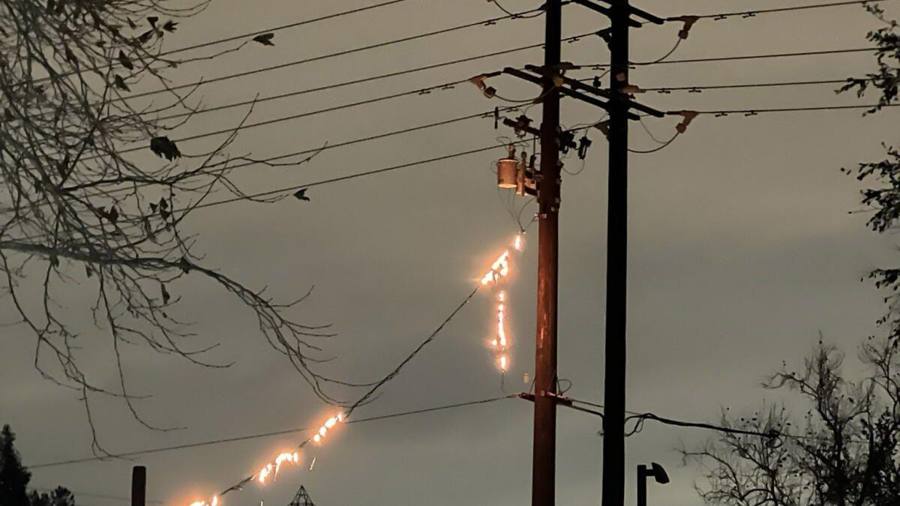
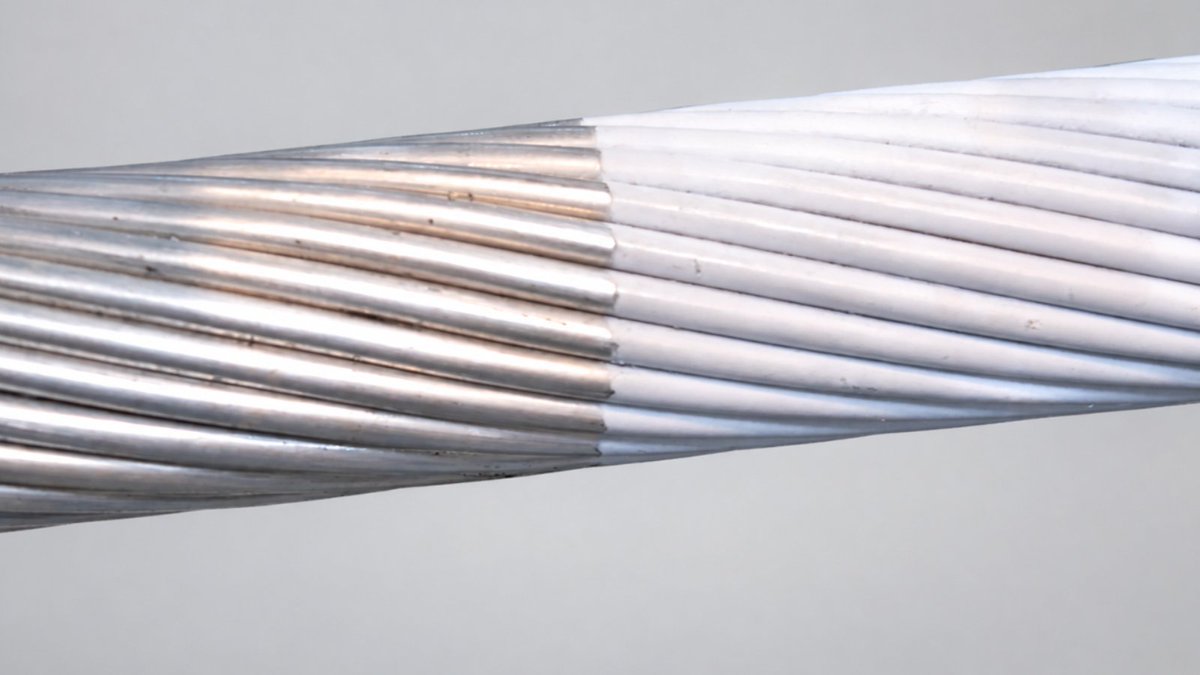
In 2021, a tree fell onto a bare PG&E power line in Northern California and started the Dixie Fire. It burned 963,309 acres and destroyed 1,329 buildings. PG&E and Southern California Edison alone spent $25.6B on wildfire prevention in 2020–2023 and budgeted $25B for 2026–2028. Last year, PG&E reported 879 fires involving its equipment. 840 of them started on its distribution lines, the lower-voltage wire that runs through neighborhoods. Most US overhead distribution wire is bare aluminum. A branch that hits it can carry current to the ground and catch fire. Wind can slap two wires together and throw molten aluminum. A broken wire can land live in dry grass. Wildfire costs made up about 27% of what PG&E charged customers in 2024. Utilities fix bare wire by replacing it. PG&E buries it at $3.25M a mile, has buried more than 1,400 miles since 2021, and this month filed a plan to bury about 5,000 more by 2037. Jacketed wire costs about $1M a mile. Kratos Materials, a startup founded by @UnchartedSherpa, makes a silicone-based coating for existing power lines. Silicone is a chain of silicon and oxygen, the same two elements as glass, with carbon groups attached. When an arc heats it, the carbon burns off and the silicon and oxygen fuse into a glassy layer. In early tests, the coating vitrified. Its target price is $85K a mile. Since 2021, State Grid utilities in China have used robots to spray insulating coatings onto live 10,000-volt lines. No US utility does this yet. Kratos still has to run its branch, wire-slap and broken-end tests. At its target price, coating PG&E's 25,000 miles of overhead fire-district line would cost about $2B, while burying them costs about $81B.
Verify it yourself: the manifest is the exact JSON whose
SHA-256 is 6415b7e39b52e0641cd1c9bfed973a9771880ca45f40ff729765c49f2cbaa7dd; it binds the tweet id, author, post time, and the SHA-256 of the text above. Re-hash the text to match 746e71806f8f64a37690f260b79bbeb35577cf29f3a1c77ca786f3e85f32d8e4, and read the anchor transaction's OP_RETURN
bsv.cx / x1 / 6415b7e39b52e0641cd1c9bfed973a9771880ca45f40ff729765c49f2cbaa7dd — the block's timestamp proves the post said this at or before that time,
with no trust in bsv.cx. Content archived via the X API.